Remembering Stan
Recollections of the eldest daughter

My first memory of my father, Stan, or Stanley George Allison, was when I was a child and had been sent to bed. I had called for my mother, and my father, tired from a day at the restaurant, had been sent up to see what I wanted. Initially, I remember being sad that it was my father and not my mother who had answered my call. Then I began to enjoy the serendipity of calling for one parent and the other may or may not show up.
My father would not read me a story. I could read those myself. He told me stories about his parents, my grandparents, who had died some time before I was born. He assured me they would have loved me very much. We had a close relationship with his sisters and their children, my cousins, who I loved to bits and knew I was loved as much in return.
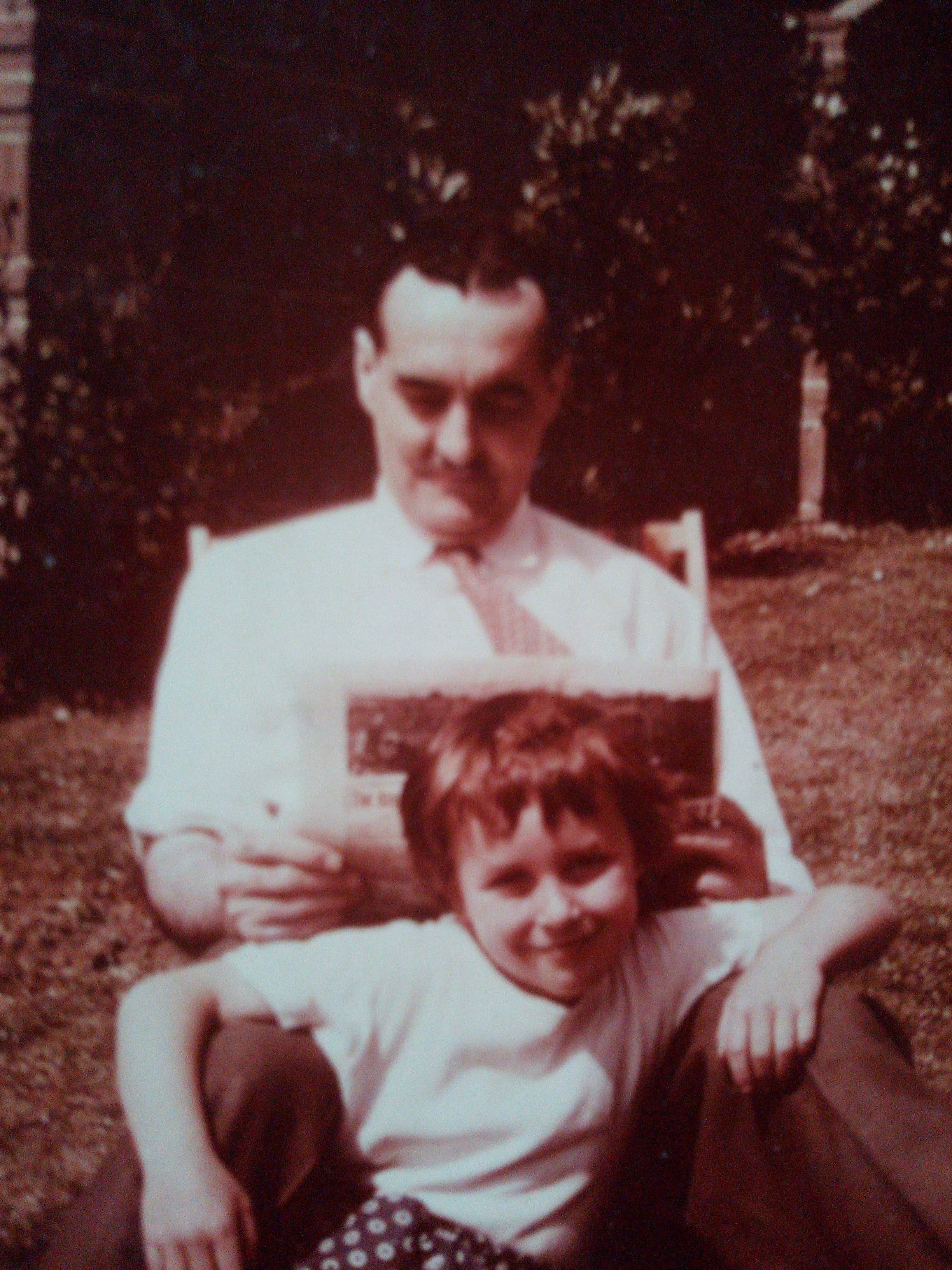
What I learned about my grandparents from Stan was the following: His parents were George Allison and Ada Piper. Ada was a smoker and, when the doctor told her to keep as far away as possible from smoke and cigarettes, she used a very long cigarette holder. As far as I know my father never smoked, my mother, Ruth, smoked a pipe for effect.
My grandfather, George, had worked at, or owned, a printers and had been an inventor. He had invented the ticket machine that could, at one time, be found on the buses in London carried by the conductor. He had been offered a one-time payment of one hundred pounds sterling or a royalty. As he was not sure about the usefulness of his own invention, he opted for the security of the one hundred pounds. Thousands, if not millions of these ticket machines were produced and he had refused the royalty, and that is that.
There was the story about how George went to visit the Mayor of London, a mythical figure, and George was smoking a cigar while waiting for his appointment. The cigar ash fell on the carpet. There was a grey fluffy cat and George took the cat and rubbed the ash into the carpet. We do not know how the cat felt about such an indignity.
Another time my father told me about the day, when he was seven and his mother was home sick in bed, his father took him to school. At the school gates Stan raised his face for the customary kiss he would have received from his mother. His father told him angrily that men don’t kiss little boys. I remember feeling a little sad on hearing this story.
At the start of the Second World War Stan had been too young to sign up. He explained he changed the date on his birth certificate (how he did not explain) and signed up. Over time, with his earnings, he bought a house for his parents in Chingford. This house passed to Auntie Gladys and her family and we would go there often for holiday meals, or just to eat one of those fantastical English “high teas” where everything is served from meat and vegetables through to biscuits and cakes. There was a sculpture of a puma on the sideboard, which had belonged to the grandparents.
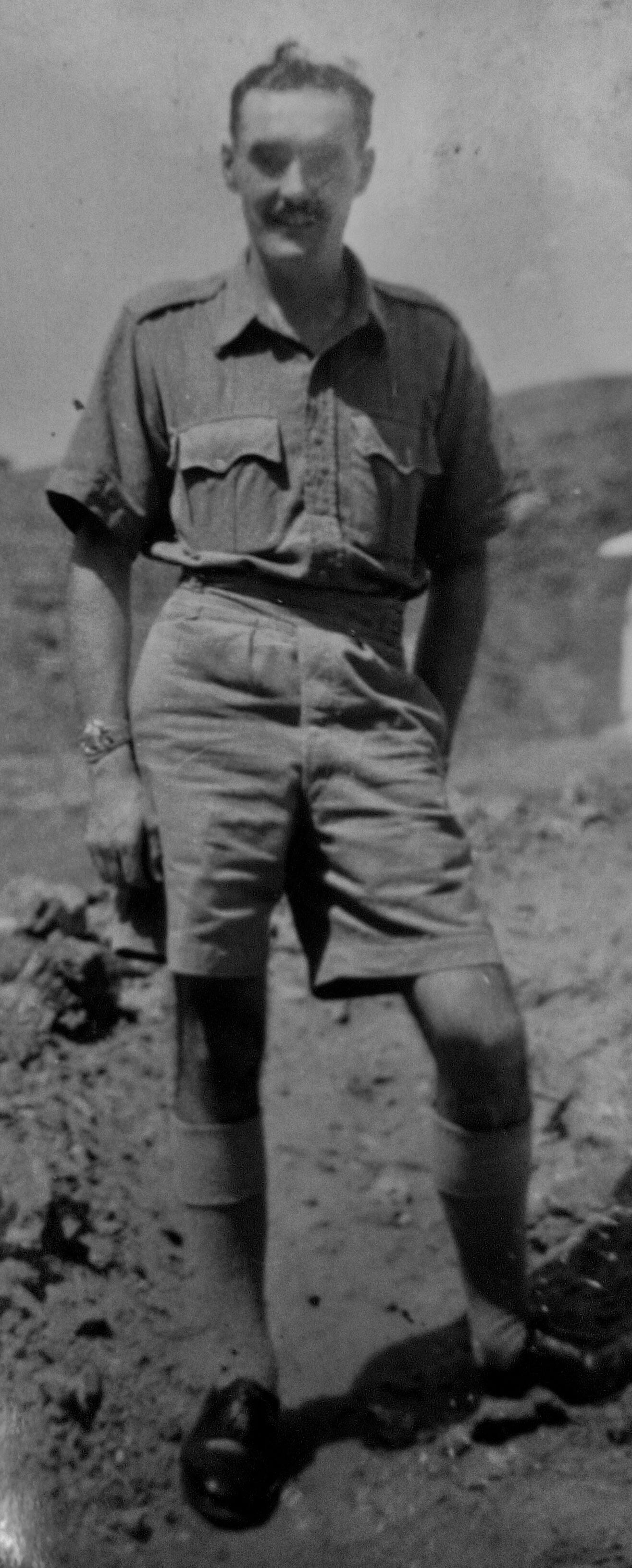
Stan was stationed in the Near East, where he met a man who owned all the hats of the major religions in the area. This man would wear the hat pertaining to the following religious holiday and would ask for the time off for “religious reasons”. My father, amused, always gave him the day off.
My father spoke only a little of his time in Yemen, Palestine, Berlin, the Faroe Islands, which was a place he had wanted to live. We never visited. He was in Egypt, because there is a photo of him in uniform on the back of a camel. He spoke of the bravery of the German people in Berlin. The city had been divided between the United States, United Kingdom, France and the Soviet Union. He told us of how the Soviets had said the British could no longer bring ten trucks into Berlin, only five. My father said that the British increased the size of the five trucks coming through, and the same quantity of supplies were delivered to the troops. There is a photo of Stan standing beside Field Marshall Montgomery, we were told this was when a new mess hall had been opened. Where, he never said.
He spoke street French (argot) well, but a cousin (Richard K?) got zero after he’d asked my father to help him with his French homework. The teacher had said there was no way that her pupil would have known any of the words used. Stan once spoke Arabic, but had forgotten much of it by the time I was old enough to ask him any questions. Although he once tried to teach me how to say: “You have no brains,” in Arabic.
Stan would become angry while reading books about the Second World War. He would say he could have written the same book, but had signed the Official Secrets Act, and was certain the writer had too. He told us that he had worked with the Navy Army and Air Force Institutes (NAAFI) in supplying the troops. He was a good cook, would prepare the savoury dishes when we had company, and my mother would prepare the desert, and any quiche or soufflé on the menu. I watched Stan prepare Beef Wellington, steak and kidney pie, Welsh Rarebit (for us children), the Sunday roast, and the best rum punch. He knew how to carve, and could feed six people from one chicken. I think our homegrown chickens were larger than the ones found in the supermarket today.
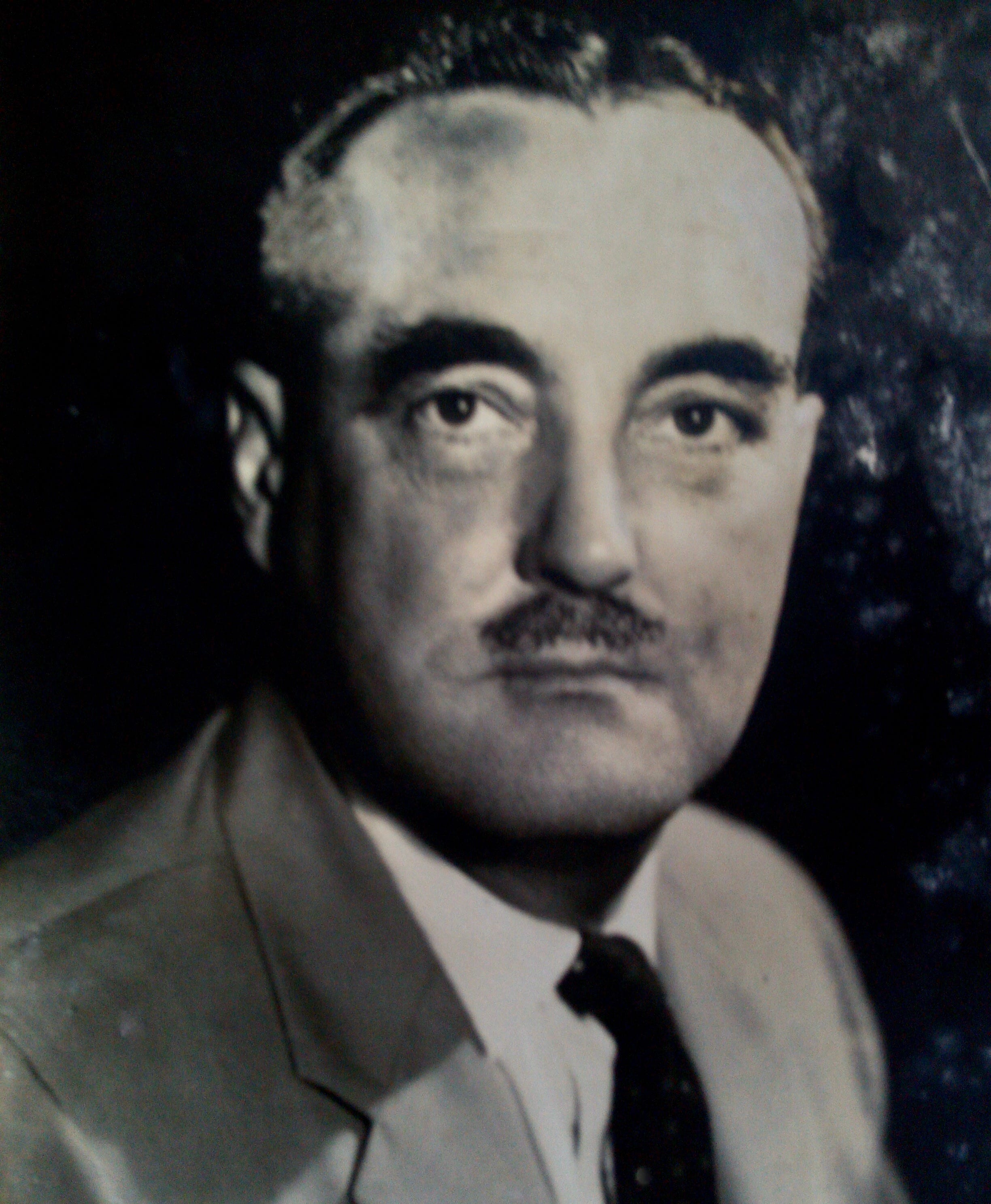
Stan could do complicated mathematical computations in his head, and was probably disappointed I couldn’t manage my times tables. He could look at a cow and know how much it weighed, as well as sacks, bags and boxes of goods. Once Stan had to teach six-year-old me how to price items for sale, after he found Peter and me on the curb side in front of our house in Hove selling bottled soft drinks to our friends at below cost.
Stan taught Peter and me how to write in Copperplate. He taught me how to touch type and waltz. He had won a gold medal as a ballroom dancer, or was it as a tap dancer? He taught me to avoid crowds. He suggested we didn’t discuss politics or religion, as these topics could be dangerous in Jamaica where we were living. We were to talk about the weather.
I remember the time my father arrived a day late at my boarding school in England for parent’s day. I had even played the piano that day and he had missed it. He was so upset. Someone had written the date wrong. Ruth, my mother, was away on a tour of the Americas by bus with her friend Isabel, who had been my kindergarten teacher. Another time Stan was taking me back to boarding school, on his own. I was so distraught that we stopped for tea and cake to cheer me up. He went to call my mother, because he wanted to prepare her for the fact he was going to take me home. My mother must have told him I’d be just fine as soon as he left me at the school, as this is what he kept repeating as we drove down the driveway to the school and he dropped me off.
Stan had never wanted us to be sent away to boarding school. He knew we would have had a better education going to the school down the road. Being home, as he had been. But my mother, who had really enjoyed boarding school, and possibly her mother, Eva, who was paying for this education, had been adamant.
In other memories, my father was once known as the funniest man in Jamaica. He had a good sense of humour, which is why I probably enjoy jokes that involve a play on words. He could speak Cockney Rhyming Slang and taught me a few expressions: Ding Dong for Song; Apples and Pears for Stairs; Trouble and Strife for Wife. He taught us about the Pearly King and Queen, the Cockney royalty of London. I admit, that I never heard his Cockney accent, until I spoke to him on the telephone for the first time.
I have no idea of what my father would have thought of today’s global situation. He used to express little respect for the Americans during the Second World War who, he said, seemed to shoot at or bomb their own side. He put it down to them chewing gum which, he surmised, probably inhibited clear thinking. He was always countered by an American friend, who had been a fighter pilot, with: “You would not have won without our help!”
Much has happened since the time of my childhood memories, and Stan’s accident in Montego Bay when he fell while walking up a hill to our cousin’s house where he had been living.
Stan did not survive the fall that broke his hip, he had always hated doctors and hospitals, and had initially refused to be taken to see a doctor or be taken to the hospital. He died in 1981 at the hospital in Montego Bay, Jamaica, of a pulmonary infarct. He was buried in the church yard behind Saint Mathew’s Anglican Church in Claremont next to Eva and Keith de Roux.
Friends, who had known him in the military, arranged for his coffin to be covered with the Jamaican flag because our friend, a Justice of the Peace, could not find a Union Jack. Someone came from the Jamaica Defence Force to play the Last Post on the bugle. I had never heard such a beautiful sound. A tall man arrived who told me my father had been his superior when he was a young soldier. He had read about his death in the Daily Gleaner and had come to pay his respects, because Stan had been the best commander he had ever had. He wanted us to know that. Thinking he would follow us to Carton for the wake, I forgot to ask his name.
Eddie Hairs, our neighbour, made us leave the grave as it was being filled with earth and then covered with cement as it was: “Too final”. We returned to Carton to the wake that, in the words of the local butcher, Willie Mac, “Come like a wedding!” He also told me that he would miss our father, Mister Stan, much more than we would because we were all away in “foreign”.
In the days that followed, Stan’s clothes were handed out among the staff: Massa Joe, Parker, John, Cecil and Vincent. They selected what they wanted from the jackets, shirts and shoes. The jackets seemed large and unwieldy, perhaps far too heavy for the tropics.
I have only just learned there is a Scottish clan Allison, with the motto: Vincit Veritas, or Truth conquers or Truth Prevails. I have known about the motto for years, because Stan spoke of it often, I had never understood there was an Allison Clan. He had always spoken of the MacAlister Clan. You can read a lot more about the Allison Clan by searching on the Internet, as I have done! There is an Allison crest and a tartan.
To Stan’s grandchildren, who may read this. I know that he would have loved you all very much. He would have been so proud of you all. Stan was not a demonstrative man, so he may not have hugged you much, or at all, but you would all have appreciated his sense of humour and his intelligence.
That’s all for now. More to come … perhaps a short story.
Mummy says that all the time as well, he would have loved us very much. Thank you for sharing this :)